Last Updated on 12 December 2025 by Johan
Armenia lies in the South Caucasus region of Western Asia. It is bordered by Georgia to the north, Azerbaijan to the east, Iran to the south, and Turkey to the west. The country is landlocked yet its mountains, valleys, and Lake Sevan make it a striking destination for travellers. Its location at the crossroads of Europe and Asia has shaped its culture and history for thousands of years.
Explanation of the name: Armenia
The name Armenia was first recorded in the Behistun inscription of King Darius I in 520 BC. In Armenian the country is called Hayastan, derived from Hayk, the legendary ancestor of the Armenian people. Over centuries the Latin form Armenia became common internationally, while Hayastan remains the native designation. This dual naming reflects both mythological heritage and global identity.
History: Armenia
Armenia is one of the world’s oldest states and its story stretches back thousands of years. The Kingdom of Urartu flourished in the 9th century BC and left behind fortresses, irrigation systems, and inscriptions that still survive. Later the Kingdom of Armenia rose to prominence under King Tigranes the Great in the 1st century BC, when its territory extended from the Mediterranean to the Caspian Sea. In 301 AD Armenia became the first country to adopt Christianity as its state religion, a decision that shaped its culture, architecture, and national identity. Churches and monasteries built in the centuries that followed remain central to Armenian heritage.
During the Middle Ages Armenia was often divided and ruled by larger powers, including the Byzantine Empire, Persia, and later the Ottoman and Russian empires. Despite foreign domination, Armenian culture endured through literature, music, and the preservation of its language. In 1918 the First Republic of Armenia was declared after the collapse of the Russian Empire, though it lasted only two years before Soviet rule was established. Armenia became part of the Soviet Union in 1922 and remained so until the early 1990s.
Following the dissolution of the USSR in 1991, Armenia regained independence and began building its modern institutions. Today it is a democratic republic with eleven administrative regions, including Yerevan as the capital, and continues to balance its ancient traditions with contemporary development.
Tourist information: Armenia
Yerevan is the cultural heart of Armenia. Republic Square is the central square of the capital. It is surrounded by neoclassical buildings and features musical fountains. The square hosts national celebrations and public events, making it a lively hub for visitors. The Cascade is a giant stairway with gardens, fountains, and sculptures. It connects downtown Yerevan with the Monument neighbourhood. Inside is the Cafesjian Center for the Arts, which displays modern art and installations. The Matenadaran Institute preserves thousands of medieval manuscripts and is one of the most important research centres in the region. The History Museum of Armenia and the National Gallery are also located in Yerevan and provide insight into the country’s past and artistic traditions.
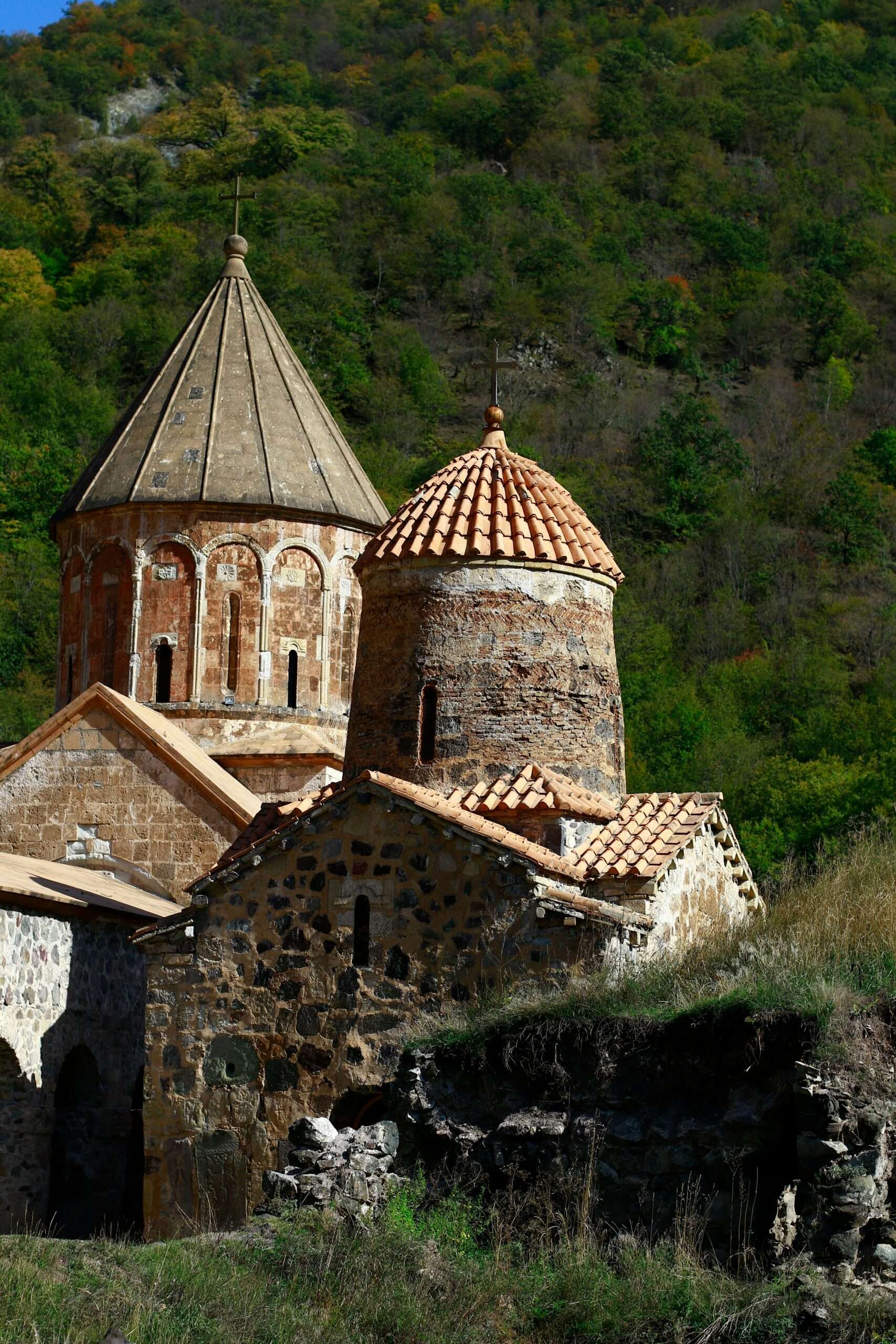
Beyond Yerevan lie many historic sites. Geghard Monastery, partly carved into rock, is a UNESCO World Heritage Site. Founded in the 4th century, it is famous for its chapels cut directly into the mountain. Nearby Garni Temple is the only Greco‑Roman colonnaded temple in the region. Khor Virap Monastery lies near the border with Turkey and offers iconic views of Mount Ararat. Noravank Monastery is set in a dramatic red canyon and features Surb Astvatsatsin Church with its unique two‑storey design. Tatev Monastery in Syunik Province is reached by the Wings of Tatev cable car, one of the longest in the world. Lake Sevan attracts visitors with beaches, trout dishes, and Sevanavank Monastery. Dilijan National Park is known as the “Little Switzerland of Armenia” for its forests and spa town. Gyumri, Armenia’s second city, features 19th‑century architecture and museums. Amberd Fortress on Mount Aragats provides a glimpse into medieval military architecture. The Areni‑1 Cave is famous for the discovery of the world’s oldest leather shoe and ancient winemaking facilities. Charents’ Arch frames Mount Ararat and is inscribed with a poem by Yeghishe Charents. The Armenian Alphabet Monument near Mount Aragats celebrates the creation of the Armenian script with large stone letters arranged in the landscape.
Top‑rated attractions include Republic Square, Garni Temple, Geghard Monastery, Lake Sevan, and Tatev Monastery. Leading museums are the History Museum of Armenia, Matenadaran, National Gallery of Armenia, Sergei Parajanov Museum, and Cafesjian Center.
Fun things for children
Families can enjoy Yerevan Zoo and Victory Park with its amusement rides. The Children’s Railway offers a miniature train through Hrazdan Gorge. In Lake Sevan children can swim and try boating. Dilijan provides easy hiking trails suitable for families. Winter resorts such as Tsaghkadzor offer ski lessons for beginners.
Culinary destinations
Armenian cuisine is rich and varied. Khorovats, the national barbecue, is popular across the country. Lavash, the traditional flatbread, is baked in clay ovens and recognised by UNESCO. Khash, a winter soup made from beef feet, is served with garlic and herbs. Tolma, vine leaves stuffed with meat and rice, is a staple. In Sevan ishkhan trout is grilled or cooked in soups. Ghapama, pumpkin stuffed with rice and dried fruits, is a festive dish. Regional wines from Areni and brandy from Yerevan are renowned. Farmers’ markets in Yerevan and Gyumri showcase seasonal produce. Wine festivals in Areni highlight local varieties such as Areni Noir.
Cycling and walking routes
Armenia offers diverse outdoor routes. The Lake Sevan circuit is ideal for cycling with views of monasteries and villages. The Jukhtak Monastery Loop in Dilijan is a moderate hike through forests. Mount Aragats, the highest peak, provides challenging ascents. Trails in Lori and Syunik lead to ancient monasteries and Silk Road paths. HIKEArmenia promotes marked trails across ten regions, making hiking accessible for visitors. Cycling tours in Vayots Dzor and Tavush combine natural scenery with cultural landmarks.
Seasonal activities and events
Armenia hosts many festivals in 2026. Yerevan will stage the Eurovision Young Musicians competition. COP17, the UN climate conference, will take place in October. Traditional events include the Barbecue Festival, Wine Festival in Areni, and Vardavar water festival. Concerts by Ara Malikian, Bi‑2, Kaleo, and Ross Wilson are scheduled. National holidays include Independence Day on 21 September and Constitution Day on 5 July. Christmas markets in Yerevan and Gyumri provide seasonal charm. Ski resorts such as Tsaghkadzor and Jermuk attract visitors with world‑class slopes.
Sources
- Absolute Armenia Travel Guide – Absolute Armenia (Local insights and tours)
- Armenia Travel Official – Armenia Travel (Top 10 attractions)
- HIKEArmenia – HIKEArmenia (Trail network)
- Armenia Travel Cycling – Armenia Travel (Cycling tours)
- Armen Tour Armenia 2026 – Armen Tour (Travel updates 2026)
- Explore Armenia Facts – Explore Armenia (Cultural facts and traditions)