Last Updated on 20 February 2026 by Johan
Norway is known for its dramatic landscapes shaped by ice, water and time. The country’s coastline stretches for thousands of kilometres and is carved by deep fjords, steep mountainsides, powerful rivers and untouched wilderness. These natural formations create one of the most distinctive environments in Europe, attracting travellers from all over the world. This article gives an introduction to Fjords in Norway; most Fjords are also described on their own pages; use the search option for details.
What Is a Fjord?
A fjord is a long, narrow inlet with steep sides or cliffs, created by glacial erosion. During the last Ice Age, massive glaciers carved deep valleys into the bedrock. When the ice melted, seawater flooded the valleys, forming the fjords we see today. Their depth, shape and dramatic surroundings make them unique compared to other coastal landscapes.
Fjords are found in several parts of the world, including Norway, Greenland, Iceland, Alaska, British Columbia, Chile, Antarctica and New Zealand. Norway, however, is home to the highest concentration of fjords, many of which are easily accessible and protected as UNESCO World Heritage Sites.
The Geirangerfjord
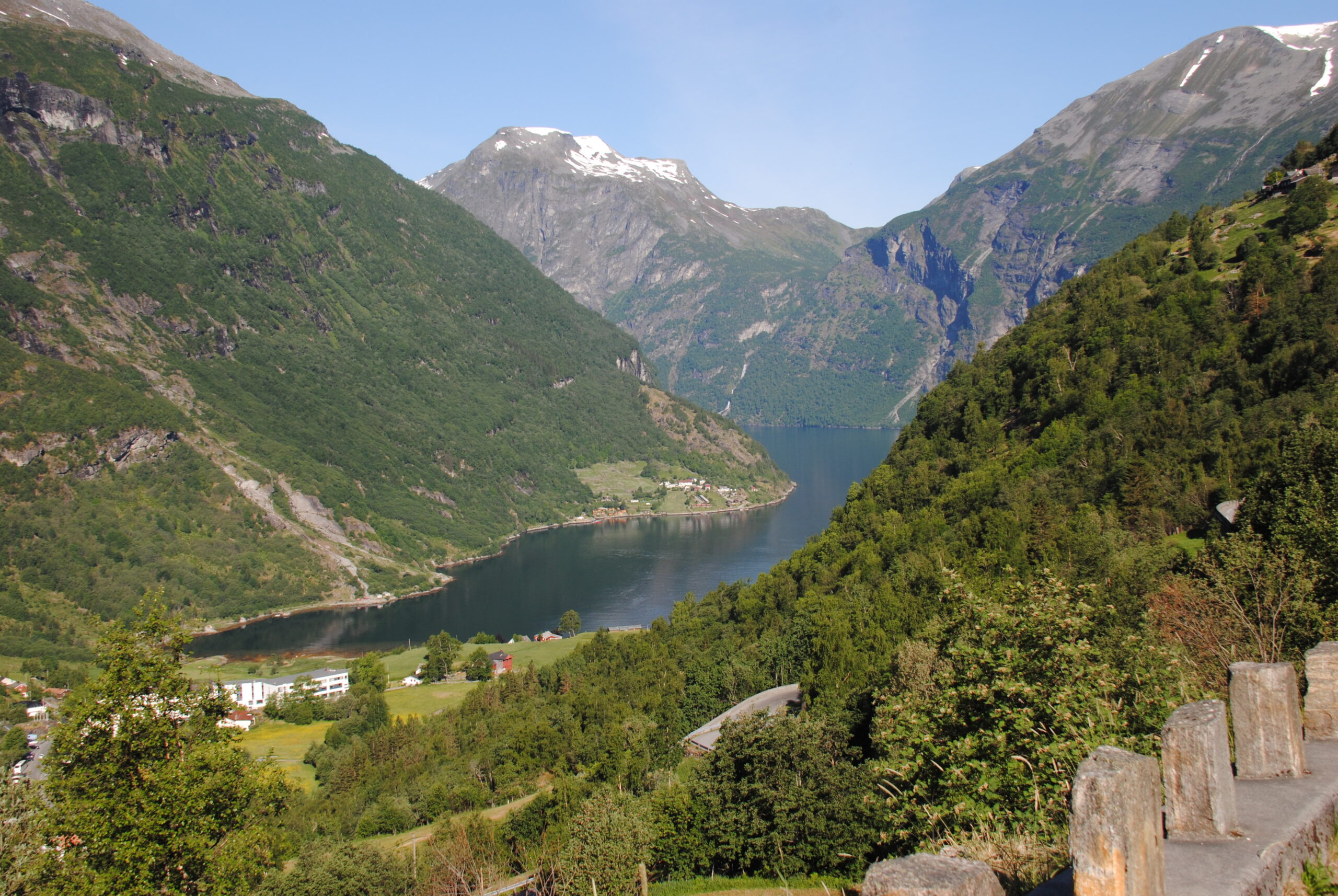
The Geirangerfjord is one of Norway’s most iconic natural attractions. Located in the Sunnmøre region of western Norway, it stretches for about 15 kilometres and is surrounded by mountains rising more than 1,400 metres above sea level. The fjord is known for its waterfalls, including the Seven Sisters, the Suitor and the Bridal Veil. These waterfalls cascade down the cliffs and are especially impressive during the spring melt.
Visitors can explore the Geirangerfjord by boat, kayak or sightseeing ferry. The viewpoints at Flydalsjuvet and Ørnesvingen offer panoramic views of the fjord and surrounding peaks. Hiking trails lead to abandoned mountain farms such as Skageflå, which provide insight into the challenging lives of past generations.
The Nærøyfjord
The Nærøyfjord is one of the narrowest fjords in the world, measuring only 250 metres across at its narrowest point. It stretches for 17 kilometres and forms a branch of the larger Sognefjord. Its steep mountainsides, waterfalls and small settlements create a dramatic landscape that has earned it a place on the UNESCO World Heritage List.
A fjord cruise through the Nærøyfjord is considered one of the most scenic journeys in Europe. Boats operate year-round between Flåm and Gudvangen, offering travellers a close view of the towering cliffs and peaceful waters. The area is also popular for kayaking, hiking and cycling, especially along the historic Royal Postal Road.
The Sognefjord Region
The Sognefjord is Norway’s longest and deepest fjord, stretching 205 kilometres inland and reaching depths of more than 1,300 metres. Its branches include the Aurlandsfjord and the Nærøyfjord, both known for their dramatic scenery. The region offers a wide range of activities, from glacier walks on the Jostedalsbreen Glacier to visits to traditional stave churches such as Borgund.
Other Notable Fjords in Norway
Norway has many fjords worth exploring, each with its own character.
Hardangerfjord
Known for fruit orchards, waterfalls and the famous Trolltunga rock formation. The fjord is especially beautiful in spring when the fruit trees bloom.
Lysefjord
Home to Preikestolen (Pulpit Rock) and Kjerag, two of Norway’s most famous hiking destinations. The fjord is surrounded by steep granite walls that rise more than 1,000 metres.
Trollfjord
Located in the Lofoten and Vesterålen archipelagos, this narrow fjord is known for its dramatic entrance and rich wildlife, including sea eagles.
Nordfjord
Combines coastal landscapes with access to glaciers, mountain peaks and traditional villages. The Loen Skylift offers one of the steepest cable car rides in the world.
How Fjords Were Formed
Fjords were shaped by glaciers that moved slowly across the landscape during the Ice Age. As the ice advanced, it carved deep valleys into the rock. When the climate warmed and the glaciers retreated, seawater filled the valleys. This process created the steep-sided, U-shaped inlets characteristic of fjords.
Many fjords are deeper than the surrounding sea because glaciers eroded the bedrock far below sea level. Some fjords have underwater thresholds near their entrances, formed by deposits left behind by the retreating ice.
Activities for Tourists in Fjords of Norway
Norway’s fjords offer a wide range of activities suitable for all seasons.
Fjord Cruises
Sightseeing boats operate in most major fjords. These cruises provide close-up views of waterfalls, cliffs and wildlife.
Hiking
Popular trails include Preikestolen, Trolltunga, Romsdalseggen and the paths around Geiranger. Many routes offer panoramic views of fjords and mountains.
Kayaking
Kayaking allows visitors to experience fjords at water level. Guided tours are available in Geiranger, Flåm, Ålesund and other locations.
Cycling
Routes such as the Rallarvegen and the roads around Hardangerfjord are popular among cyclists.
Winter Activities
In winter, fjord regions offer skiing, snowshoeing and northern lights viewing, especially in northern Norway.
Practical Information for Visitors
Best Time to Visit
The main season runs from May to September. Summer offers long days and mild temperatures. Spring brings waterfalls at their strongest, while autumn offers colourful landscapes.
Getting Around
Norway has an extensive network of ferries, buses and trains. The Flåm Railway, one of the steepest train lines in the world, connects the fjord village of Flåm with the mountain station of Myrdal.
Weather
Fjord regions can experience rapid weather changes. Waterproof clothing and sturdy footwear are recommended.
Sustainability
Many fjord areas are protected, and visitors are encouraged to follow local guidelines to preserve the natural environment.
Why Norway’s Fjords Are Unique
Norway’s fjords stand out because of their accessibility, depth and dramatic surroundings. Many fjords are located close to towns and villages, making them easy to explore. Their combination of steep mountains, waterfalls, glaciers and cultural heritage creates a landscape found in few other places on Earth.
Sources
https://www.visitnorway.com
https://whc.unesco.org
https://www.norwegianheritage.no
https://www.environment.no
https://www.met.no