Last Updated on 30 January 2026 by Johan
The French Wars of Religion were among the most transformative conflicts in European history. Beginning in 1562 and lasting until 1598, they pitted French Protestants (Huguenots) against the Catholic monarchy and powerful noble families. The period between 1559 and 1576, covered in the original text by historian James Westfall Thompson, marks the volatile opening phase of these wars. It was a time defined by political ambition, religious persecution, and the struggle for control over a fragile monarchy.
This article revisits the early years of the conflict, clarifies historical details, and highlights key locations that modern visitors can explore to better understand this dramatic chapter of French history.
Key Themes during the French Wars of Religion
1. Power Vacuums and Noble Rivalries
The accidental death of King Henry II in 1559 created a sudden power vacuum. His heir, Francis II, was only fifteen and physically frail. This allowed powerful noble families—especially the House of Guise—to dominate the royal court. Their rapid consolidation of authority alienated other major families, including the Bourbons and the Montmorencys, and set the stage for political rebellion.
2. Religious Polarization
By the mid‑16th century, Protestant ideas had spread widely in France, especially among urban elites and segments of the nobility. The monarchy, influenced by conservative Catholic advisors, responded with increasingly harsh repression. Executions, confiscations, and the establishment of special courts deepened resentment and pushed many Protestants toward political resistance.
3. The Fusion of Religious and Political Opposition
The Huguenot movement was never purely religious. Many nobles who opposed the Guises used Protestant grievances as a rallying point. This merging of political ambition and religious identity made compromise difficult and violence more likely.
4. The Rise of Catherine de Medici
As queen mother and later regent, Catherine de Medici became a central figure. Her attempts to balance factions, preserve the monarchy, and maintain stability shaped the course of the wars. Although often portrayed as manipulative, modern scholarship emphasizes her pragmatic efforts to prevent civil collapse.
Major Figures in the French Wars of Religion
Catherine de Medici
Widow of Henry II and mother of Francis II, Charles IX, and Henry III. She sought to preserve royal authority through negotiation, though her policies sometimes backfired.
Francis, Duke of Guise
A celebrated military commander and one of the most powerful men in France. His family’s dominance during Francis II’s reign made them the primary target of political opposition.
Charles, Cardinal of Lorraine
Brother of the duke of Guise and a brilliant political strategist. He controlled financial and ecclesiastical policy and was widely feared for his ambition.
Antoine of Bourbon, King of Navarre
First prince of the blood and theoretically the rightful political leader of France during the minority of Francis II. His indecision weakened the Bourbon position.
Louis of Bourbon, Prince of Condé
Brother of Antoine and a key leader of the early Huguenot political movement. His involvement in the Conspiracy of Amboise made him a central figure in the unfolding conflict.
Gaspard de Coligny
Admiral of France and one of the most prominent Huguenot leaders. His military skill and political influence made him a major opponent of the Guises.
Essential Events during the French Wars of Religion
The Death of Henry II (1559)
Henry II died after a jousting accident during celebrations for the marriage of his daughter Elizabeth to Philip II of Spain. His death destabilized the monarchy and accelerated factional conflict.
The Rise of the Guise Regime
With Francis II unable to rule independently, the Guises took control of the government. They filled key offices with loyalists, sidelined rival nobles, and intensified persecution of Protestants.
Escalation of Religious Repression
New edicts criminalized Protestant worship, authorized informants, and empowered special courts. Executions such as that of the Parisian magistrate Anne du Bourg inflamed public anger.
The Conspiracy of Amboise (1560)
A coalition of Huguenot sympathizers and political opponents of the Guises plotted to seize control of the young king and remove the Guise brothers from power. The plot was discovered, leading to mass arrests and executions at Amboise. Although it failed, the conspiracy revealed the depth of national unrest and pushed France closer to civil war.
The States‑General of Orléans (1560)
In an attempt to calm tensions, Catherine de Medici convened the States‑General. Delegates demanded financial reform, religious moderation, and limits on noble power. Although the meeting did not resolve the crisis, it marked a shift toward broader political participation.
The First War of Religion (1562–1563)
The massacre of Huguenots at Vassy by the duke of Guise triggered open warfare. Major battles at Rouen and Dreux followed, ending with the Peace of Amboise, which granted limited toleration to Protestants.
Visiting Key Sites Today reminding on the French Wars of Religion
Many locations associated with the early Wars of Religion remain accessible to visitors. These sites offer insight into the political and religious tensions of the era.
Château d’Amboise (Loire Valley)
The site of the failed Conspiracy of Amboise. Visitors can explore the royal chambers, defensive towers, and the terrace overlooking the Loire River. Interpretive displays explain the executions that took place here in 1560.
Blois
The Château de Blois was a major royal residence and political center. It later became the site of the assassination of the duke of Guise in 1588, a turning point in the wars.
Orléans
A stronghold of early Protestantism. The city’s cathedral and historic quarter provide context for the States‑General of 1560 and the early Huguenot movement.
Paris
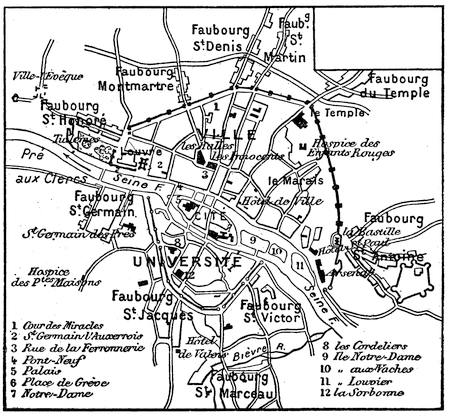
Paris played a decisive and often volatile role in the early French Wars of Religion, serving as the political and symbolic heart of Catholic power. As the seat of the monarchy, the Parlement of Paris, and influential theological faculties, the city became a center of resistance to Protestant reform and a stronghold for the ultra‑Catholic Guise faction. Public opinion in Paris was fiercely conservative, and its crowds frequently shaped national events through demonstrations, riots, and pressure on the crown. Decisions made in the capital—whether royal edicts, judicial rulings, or acts of repression—reverberated across the kingdom, making Paris not only a backdrop but an active force in escalating the conflict.
Key locations you can visit today include:
- The former site of the Tournelles Palace, where Henry II died.
- The Latin Quarter, where Protestant ideas circulated among students and jurists.
- The Île de la Cité, center of royal and ecclesiastical authority.
Rouen
Scene of major battles and political negotiations. The city’s medieval streets and Gothic cathedral evoke the atmosphere of 16th‑century France.
Poitiers and Bordeaux
Important regional centers where Protestant communities grew despite persecution.
Why This Period of the French Wars of Religion Still Matters
The early French Wars of Religion shaped the political evolution of France. They challenged the idea of absolute monarchy, forced debates about religious tolerance, and influenced the development of modern statecraft. The Edict of Nantes in 1598 eventually ended the wars by granting limited rights to Protestants, but the conflicts left a lasting imprint on French identity.
For modern readers and travelers, the era offers a compelling blend of political intrigue, religious transformation, and architectural heritage.
Sources
- Bibliothèque nationale de France – Archives and historical documents
https://www.bnf.fr - Archives Nationales (France) – Official state archives
https://www.archives-nationales.culture.gouv.fr - Château d’Amboise – Official site https://www.chateau-amboise.com
- Château de Blois – Official site https://www.chateaudeblois.fr
- Ministère de la Culture (France) – Historical monuments database https://www.culture.gouv.fr
- Project Gutenberg edition of The Wars of Religion in France (public domain) https://www.gutenberg.org/ebooks/49266